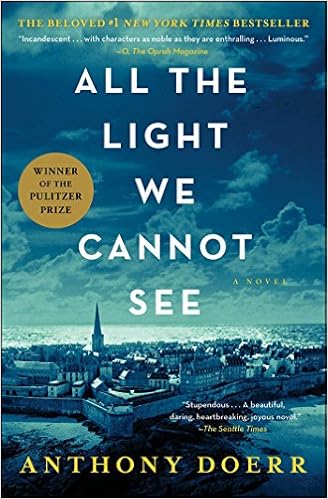
All the Light We Cannot See is a book by Anthony Doerr about World War 2 and the stories of these fictional characters in the midst of it. These characters include the blind French girl Marie-Laure LeBlanc, the orphan radio aficionado and Nazi soldier Werner Pfennig, and a few other characters that are hardly ever explored minus their relation to the stories two protagonists. The book can be easily divided into about 5 acts, although the story is not quite linear, which is something I go into depth during the second paragraph. The story has a very strong beginning, a decent middle section, and an ending that ties up all of the plot’s loose ends despite it being quite boring (although I may have just been tired of the book at that point). None of the main characters make decisions that are logically questionable or out of character for them, however this may just be a byproduct of the fact that the main characters (LeBlanc and Pfennig) don’t seem to be in full control of their lives, due to the fact that one of them is seriously disabled and the other is a soldier in one of the most infamously authoritarian (among other things) regimes the world has seen thus far.
The story follows this format of beginning with the climax of the story, and each section of the story afterward is interjected with chapters from what would be this story's climatic section. While beginning a story with its own end is not unheard of nor uncommon, it’s the interjections in between each section that truly wear on the reader. Beginning a story with its own end is a good tactic because it can inform the audience of what will happen to the story's protagonist(s) before these characters are even formally introduced, giving the entire story some sort of feeling of suspense in the reader or audience wondering how the events later on in the story will lead to this one, or alternatively some good old dramatic irony, similar to Shakespeare’s Romeo and Juliet. However, constantly interjecting your story with these sections of the climax disrupt the flow of the story, and almost insulting the reader, essentially saying “by the way this is how the book ends in case you forgot already,” every time a section is completed. This method of interjection and nonlinear structure also kills off the story's actual climax and it does not have as much effect as it should on the reader. Overall if I were to rate this book I’ll give it a light to decent 6/10.